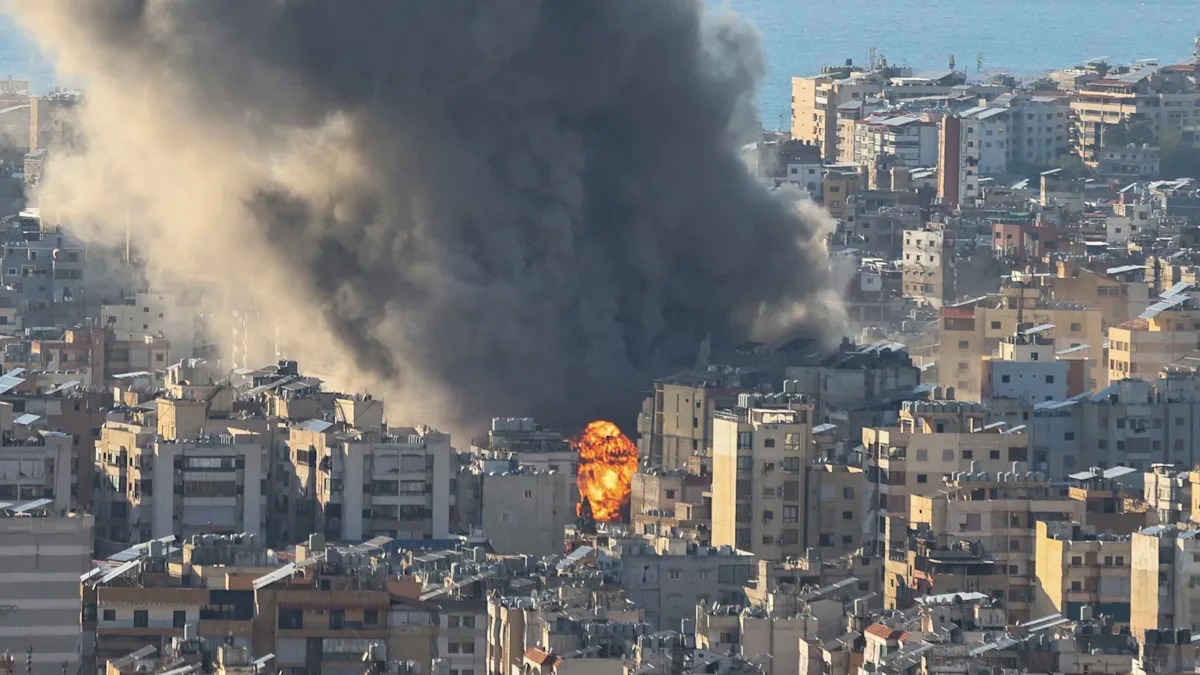
Trump's Iran Retaliation: Unpacking the Strikes Following Khamenei's Death
The geopolitical landscape of the Middle East is perpetually on a knife-edge, and few events underscore this volatility more than the dramatic escalation of tensions between the United States and Iran. Following the confirmation of Ayatollah Ali Khamenei's death, reportedly in joint U.S.-Israel attacks, the world watched as former President Donald Trump issued stark warnings of an "unprecedented" response against the Islamic Republic. This pivotal moment, often described as a significant trump iran réponse, was not an isolated incident but the culmination of decades of simmering hostilities, perceived threats, and a firmly articulated American foreign policy stance.
Understanding the immediate strikes that followed Khamenei's demise requires delving into both historical grievances and the specific strategic calculations that defined the Trump administration's approach to Tehran. It was a moment that redefined the potential scope of conflict, triggering widespread debate about its justifications, its legality, and its long-term ramifications for regional stability and global security.
The Weight of History: Decades of Tensions Culminate
For President Trump, the decision to authorize significant combat operations in Iran was framed as a necessary measure to defend American lives and interests against a "vicious" regime. His public statements consistently highlighted a long litany of alleged provocations and acts of terror attributed to Iran:
- The 1979 US Embassy Hostage Crisis: One of the regime's first acts, holding American diplomats hostage for 444 days, established a foundation of animosity.
- State Sponsorship of Terrorism: Trump repeatedly labeled Iran as the "world's number one state sponsor of terror," citing its arming, training, and funding of militant proxies across the Middle East. From Lebanon to Yemen, Syria to Iraq, these groups, according to the U.S. narrative, have "soaked the earth with blood and guts."
- Attacks on US Personnel and Allies: Specific incidents like the 1983 Marine Barracks bombing in Beirut (killing 241 American military personnel), involvement with the 2000 attack on the USS Cole, and the killing and maiming of hundreds of American service members in Iraq, were consistently invoked.
- Hamas and the October 7th Attacks: A particularly strong point of contention was the allegation that Iran's proxy, Hamas, orchestrated the "monstrous" October 7th attacks on Israel, resulting in the deaths of over 1,000 innocent people, including 46 Americans, and the taking of hostages. This event significantly escalated calls for a robust trump iran réponse to Iranian-backed actions.
- Internal Repression: Trump also pointed to Iran's brutal repression of its own citizens, alleging the killing of "tens of thousands" of protestors.
Beyond these historical flashpoints, a central tenet of the Trump administration's foreign policy was an unwavering commitment that "this terrorist regime can never have a nuclear weapon." This principle drove actions like "Operation Midnight Hammer" in June, aimed at crippling the regime's nuclear capabilities. These long-standing grievances, perceived as an "unending campaign of bloodshed and mass murder," provided the ideological groundwork for a decisive American response when a critical moment arrived.
Khamenei's Demise: A Catalyst for Action
The confirmation of Ayatollah Ali Khamenei's death sent shockwaves through the region. While reports from Iranian state media attributed his demise to "joint U.S.-Israel attacks," the specific circumstances surrounding his death remain a subject of intense geopolitical scrutiny. Regardless of the exact details, the passing of the Supreme Leader, a figure who had symbolized the continuity and defiance of the Islamic Revolution for decades, presented a unique and sensitive moment for all regional actors.
For the Trump administration, Khamenei's death appeared to be more than just a passing of a leader; it was interpreted by some as a potential strategic opening or a direct consequence of ongoing covert operations. President Trump's immediate and unequivocal warning to Iran—that it would face a "very hard" and "unprecedented" response if it retaliated—underscored the gravity of the situation. This was not merely a diplomatic statement but a clear signal of an intent to escalate, positioning the U.S. strikes as a preemptive measure or a powerful deterrent against perceived Iranian aggression in the wake of such a monumental leadership change.
The timing of the U.S. strikes, coming so swiftly after the confirmation of Khamenei's death, suggests a calculated decision to seize the moment, perhaps to prevent a power vacuum from being filled by a more aggressive successor or to assert dominance in a highly volatile period. It was a potent trump iran réponse, demonstrating a willingness to act decisively on intelligence and long-held policy objectives.
Domestic Discontent: The Home Front's Skepticism
While the Trump administration projected an image of resolute determination abroad, the domestic front presented a more complicated picture. New surveys following the joint U.S.-Israel attacks indicated a significant disconnect between the administration's foreign policy and public sentiment. Polls from Reuters/Ipsos, CNN, and the Washington Post revealed that a substantial portion of the American public was overwhelmingly opposed to the expanding conflict with Iran. Trump's Iran War: Public Opinion Turns Amid US Casualties and Costs, as many reports detailed, was clearly facing a challenge.
Key factors contributing to this domestic disapproval included:
- Rising Costs: A significant concern was the potential economic impact, with nearly half of respondents in one survey stating they would be less likely to support the war if gas and oil prices increased in the United States.
- US Casualties: The initial days of the conflict saw damage to U.S. military bases throughout the region and the tragic loss of at least four U.S. service members. Such casualties inevitably fuel public skepticism about military engagements.
- Shifting Justifications: Critics pointed to a series of shifting justifications offered by Trump and his top aides, which did little to reassure a wary public.
Despite the evident public apprehension, President Trump remained outwardly unconcerned, famously stating, "I think that the polling is very good, but I don’t care about polling." This stance highlighted a leader willing to pursue a foreign policy agenda irrespective of immediate domestic popularity, underscoring the complexities of political leadership during times of international crisis.
Analyzing Trump's Stance and Future Implications
The swift and forceful trump iran réponse following Khamenei's death was a defining moment in US-Iran relations, emblematic of the "maximum pressure" strategy adopted by the Trump administration. This strategy aimed not just to deter but to fundamentally alter the behavior of the Iranian regime, particularly regarding its nuclear ambitions and regional proxy activities. The administration's unwavering commitment that Iran "can never have a nuclear weapon" was a consistent policy line, leading to actions like the aforementioned "Operation Midnight Hammer." For a deeper dive into this aspect, see Trump's Iran Policy: From Terror Sponsorship to Nuclear Ambitions.
Practical Takeaways for Geopolitical Analysis:
- Leadership Transitions as Opportunities: The response to Khamenei's death highlights how major leadership changes within an adversary can be perceived as strategic opportunities for decisive action or significant deterrence.
- The Interplay of History and Immediate Triggers: US foreign policy toward Iran is deeply rooted in historical grievances. Understanding these long-standing issues is crucial for interpreting current events, even when an immediate trigger, like a leader's death, precipitates a response.
- Domestic Opinion vs. Executive Action: The public's initial disapproval of escalating conflict underscores the tension between executive foreign policy decisions and domestic sentiment, especially when costs in lives and resources become apparent.
- Signaling and Deterrence: Trump's strong rhetoric and immediate strikes served as a powerful signal of intent, designed to deter further Iranian retaliation and reshape the regional power dynamic.
The ramifications of such a forceful trump iran réponse extend far beyond the immediate aftermath. They have undoubtedly reshaped the regional power balance, influenced Iran's internal dynamics, and left a complex legacy for future administrations to navigate. The incident continues to serve as a critical case study in the volatile world of international relations, demonstrating how perceived threats, historical animosities, and the demise of key figures can converge to trigger significant military action.
Conclusion
The US strikes following the confirmed death of Ayatollah Ali Khamenei marked a dramatic escalation in the long-fraught relationship between the United States and Iran. Driven by a deep-seated history of grievances, a firm policy against Iranian nuclear proliferation, and the immediate catalyst of a leadership transition, President Trump's administration chose a path of decisive military action. This formidable trump iran réponse, while justified by Washington as essential for national security and the defense of allies, also ignited significant domestic debate and highlighted the profound complexities of modern geopolitical confrontation. The legacy of these strikes continues to resonate, shaping the trajectory of the Middle East and serving as a stark reminder of the delicate balance of power in one of the world's most volatile regions.